
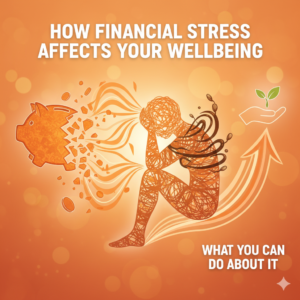
Money touches every part of life. It decides where you live, what you eat, how secure you feel, and even how much you can plan for the future. But money is also one of the biggest sources of stress. Rising costs, unpredictable jobs, and social pressures have made financial stress part of daily life. Over time, this stress affects your sleep, your focus, your relationships, and your overall wellbeing.
This is not just about numbers on a bank statement. It is about how those numbers shape your peace of mind.
The hidden cost of financial stress
Financial stress shows up in ways people do not always notice at first. You may feel anxious, restless, or distracted, but the real cause is money worry sitting at the back of your mind.
Sleep troubles: Thinking about unpaid bills or EMIs at night can disturb sleep. Lack of rest then makes it harder to think clearly the next day.
Low focus at work: When the brain is busy calculating debts or expenses, it cannot give full attention to tasks. Productivity drops, which may even risk your income further.
Strain on relationships: Disagreements about spending or saving are among the most common reasons couples and families fight. Silence or arguments create emotional distance.
Physical symptoms: Stress often shows up in the body. Headaches, high blood pressure, stomach issues, and fatigue are common when financial worries pile up.
When stress becomes constant, it turns into a cycle: money worries affect wellbeing, reduced wellbeing affects performance, and poor performance leads to more money worries.
Why financial stress feels heavier today
Modern life has made managing money more complicated than before. People today are juggling multiple responsibilities, expectations, and uncertainties.
Extended family support: Many working adults support parents, children, and sometimes siblings. Carrying everyone’s needs on one paycheck stretches finances thin.
Social pressures: Weddings, festivals, and birthdays often come with high expenses. Even if savings are low, people feel pressured to spend to maintain appearances.
Debt culture: Easy loans, credit cards, and instant credit apps make borrowing simple. But the high interest rates quickly trap people into repayment cycles.
Job insecurity: Contract jobs, layoffs, and unpredictable career paths create uncertainty about future income. This insecurity directly fuels anxiety.
Lack of financial literacy: Many people are not taught how to plan, save, or invest. Without clear strategies, money management feels overwhelming.
Practical steps to reduce financial stress
You cannot change the economy or stop unexpected events, but you can build habits that protect your peace of mind.
Track your money
Write down every rupee that comes in and goes out. Use a notebook, Excel sheet, or free apps like Walnut or Money Manager. Awareness is the first step toward control.Make a realistic budget
Divide your expenses into needs, wants, and savings. Do not aim for perfection in the first month. Even small changes, like cutting down on unused subscriptions, build momentum.Build an emergency fund
Start small, even with 500 or 1000 rupees a month. Over time, this fund becomes your safety net during medical expenses, sudden job loss, or urgent repairs. Knowing you have a backup reduces anxiety.Avoid high-interest traps
Instant loans and credit cards may feel like relief in the short term, but they come with high costs. Focus on paying off the debt with the highest interest first. If possible, avoid borrowing for non-essential spending.Talk about money openly
Share your financial situation with family members instead of carrying the entire burden alone. When everyone knows the limits, expectations become realistic and decisions easier.Plan for long-term goals
Saving for retirement, education, or a home feels less stressful when broken into smaller monthly amounts. Systematic investment plans (SIPs) or recurring deposits are simple ways to start.Seek expert advice
If you feel stuck, consult a financial advisor. Professional guidance can save you years of confusion and bring clarity to your planning.Take care of your wellbeing
Stress relief practices matter. Exercise, meditation, or even a 15-minute walk improves mood and lowers anxiety. A calmer mind makes better financial decisions.
Building resilience for the future
Financial stress will not disappear completely, but resilience can make it easier to handle.
Develop multiple income streams: A side business, freelancing, or investing in skills can provide extra security.
Practice mindful spending: Before buying, ask yourself if the item truly adds value. Small acts of conscious spending prevent regret later.
Focus on progress, not perfection: Even if you cannot save large amounts, saving something consistently builds confidence.
Stay informed: Read about basic finance, budgeting, and investment. Knowledge reduces fear and increases control.
The bigger picture
Money and wellbeing are deeply connected. When finances are uncertain, stress levels rise. When stress levels rise, finances suffer. Breaking this cycle starts with small, consistent steps. Tracking expenses, reducing debt, saving a little every month, and taking care of your mind and body are not grand solutions, but they are effective ones.
Everyone’s situation is different, but the principles remain the same. Financial wellbeing is not about earning the highest salary. It is about balance, planning, and peace of mind. The goal is not just wealth but a life where money supports your wellbeing instead of harming it.
Final thought
If financial stress has been weighing you down, know that you are not alone. Millions are facing the same challenges in today’s fast-paced world. The difference comes from how you respond. Start small, stay consistent, and remind yourself that stability is built step by step. Your wellbeing is worth the effort.